
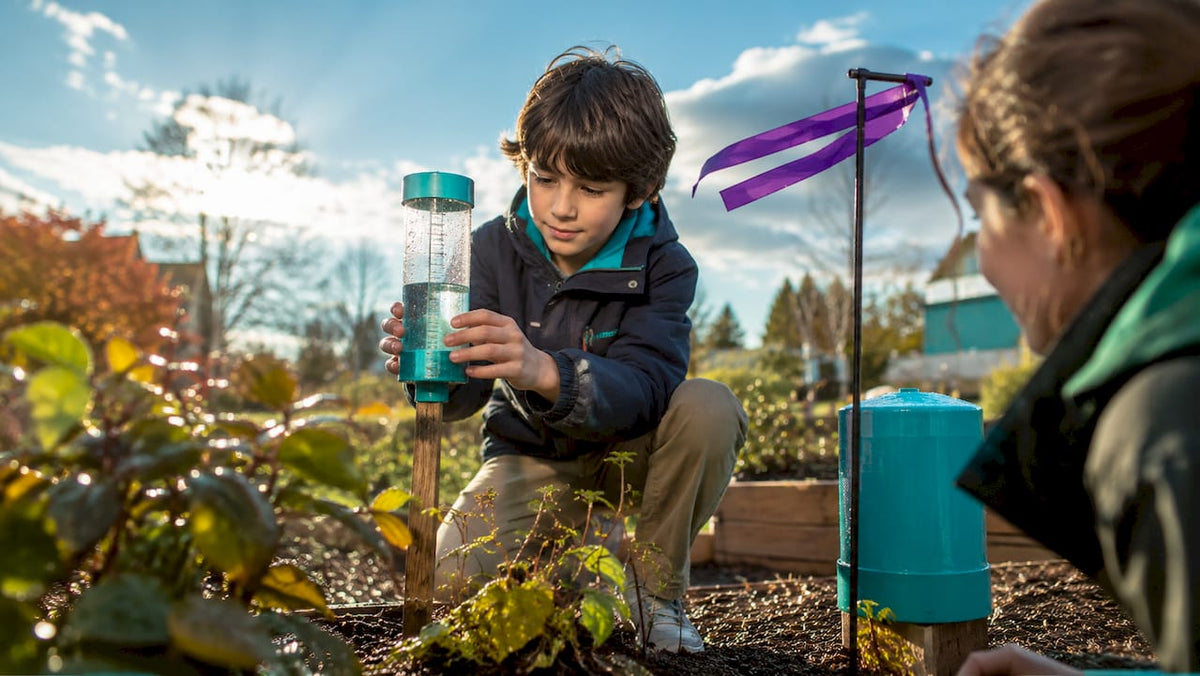
Build Confidence With Outdoor STEM and the E³ Method for Teachers & Parents
Outdoor STEM activities are hands-on, low-cost experiments and engineering challenges you run outside to build observation, measurement, and design skills. They turn a backyard or a school field into a lab where kids test ideas, fail safely, and try again. What follows is a categorized, lesson-ready collection built for real classrooms and real families.
TL;DR:
- Most outdoor STEM activities rely on simple, natural, and recycled materials, making them accessible and scalable for different group sizes.
- Time required for activities varies from 35 minutes for engineering challenges to several days for ecosystem or weather projects, influencing the scope and complexity.
- Safety measures include checking for hazards, using non-toxic materials, and having backup plans for weather disruptions to ensure a secure outdoor environment.
- Success depends on controlling variables carefully, such as only changing one factor at a time, to clearly observe what drives improvements between trials.
- Kits with guided notebooks, role-play accessories, and reusable materials support students’ confidence, reflection, and understanding through the E³ Method.
Table of Contents
- What Is Outdoor STEM and Why It Builds Real Skills
- Materials, Setup, and Low-Cost Swaps
- Top Outdoor STEM Activities by Category
- Adapting Activities by Age and Learning Goal
- Planning, Management, and Safety Outdoors
- Turning Activities Into Confidence Builders With the E³ Method
- A Teacher’s Honest Take on What Actually Works
- Bring These Activities Home With Ready-Made Kits
- Further Lesson Plans Worth Downloading
- Sources
What Is Outdoor STEM and Why It Builds Real Skills
Outdoor STEM ties directly to how scientists and engineers actually work: observe something, measure it, build a solution, test it against reality. Instead of reading about forces or ecosystems, kids feel wind resistance on a kite string or watch water pull leaf pigments apart. Core concepts show up naturally outdoors: forces and motion, ecosystems and habitats, weather patterns, and data collection through counting, timing, and graphing.
Session length matters more than most people assume. A single engineering challenge fits neatly into a 35-minute build, test, and redesign cycle, while a weather station or garden observation project stretches naturally across several days or weeks. Time outdoors itself carries a separate benefit: research on outdoor learning links it to sharper attention and stronger engagement, which means the setting is doing part of the teaching before a single experiment begins.
Materials, Setup, and Low-Cost Swaps
You do not need a supply closet full of science equipment to run great outdoor science experiments. Most of the best outdoor STEM activities pull from what is already in a recycling bin or lying on the ground. Teacher guides consistently point to sticks, rocks, leaves, and recyclables as the backbone of low-cost projects, and that approach scales whether you have five kids or thirty.
Build a small reusable “outdoor kit” once, and you can run dozens of activities from it:
- Cardboard boxes, egg cartons, and plastic bottles for structures and rovers
- A kitchen scale, measuring tape, and stopwatch for data collection
- Paper cups, string, and clothespins for wind and weather tools
- Zip-top bags and a hand lens for collecting and inspecting natural finds
- A clipboard, pencils, and simple data sheets for recording results
When foraging outside, stick to fallen leaves, twigs, and rocks rather than live plants, skip anything near roadways or treated lawns, and have kids wash hands after handling soil or bugs, following this parent’s guide to sensory play and child development for safety and inclusivity. Pack activity kits into labeled bins so each one is grab-and-go, and store natural materials separately since they degrade faster than plastics and cardboard.
Top Outdoor STEM Activities by Category
These activities are grouped by focus area so you can match a project to your goals, whether that is nature-based STEM education, weather tracking, or flight and launch mechanics. Each one lists the core materials, a rough age range, and a variable worth testing.
Engineering challenges
- Egg drop challenge. Kids build a protective capsule from straws, cotton balls, or cardboard to keep a raw egg intact after a fall from a set height. Test variable: material padding thickness versus drop height. Ages 6 and up; prep time under 10 minutes. For structured variations and scoring ideas, see this egg drop challenge guide.
- Stick towers. Using sticks, string, and mud or tape as a binder, kids build the tallest freestanding tower that survives a gentle shake test. Test variable: base width versus final height. Works for ages 5 to 10, grouped in pairs.
- Cardboard rover. Kids build a small wheeled vehicle from cardboard and attach it to a simple pull mechanism, then measure how far it travels per wheel rotation. This mirrors the build, test, evaluate, and redesign cycle engineers actually use, and gives older kids a chance to graph distance against rotations to spot patterns tied to friction and wheel size.
Nature and ecosystem projects
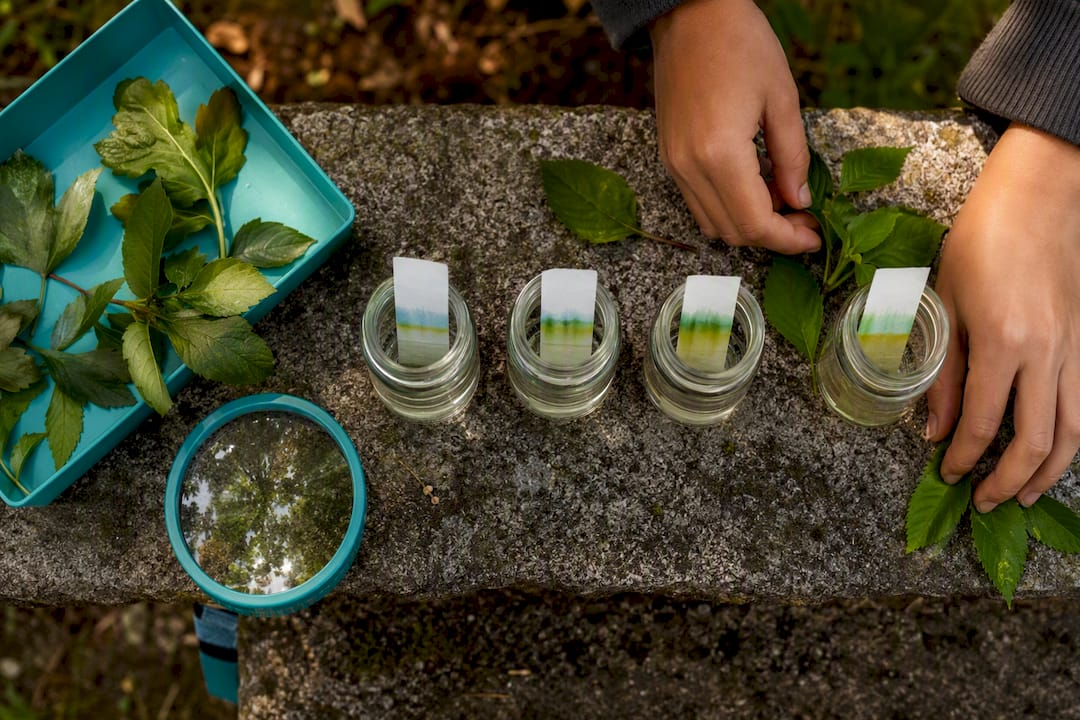
- Leaf chromatography. Crush leaves and use rubbing alcohol on coffee filter strips to separate hidden pigments into visible bands. Ages 7 and up, 20 minutes plus drying time.
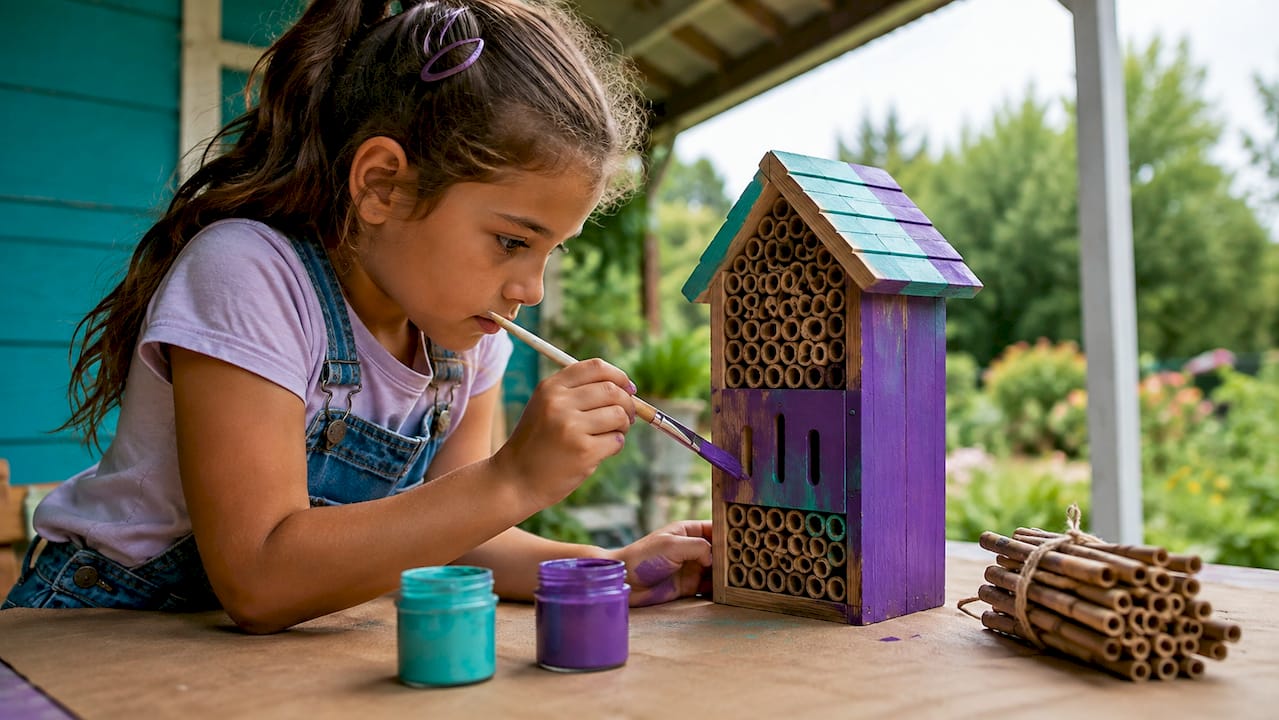
- Insect hotel. Kids stack sticks, pinecones, and cardboard tubes into a small structure that shelters local insects, then track which visitors show up over a week. Great for mixed-age groups since younger kids build while older kids log data.
- Plant observation journal. Pick one plant or patch of ground and record height, leaf count, or soil moisture every few days. This is one of the simplest gardening STEM projects and works well as a running classroom or backyard log.
Weather and measurement tools
- DIY anemometer. Paper cups on a pinwheel frame spin with the wind; count rotations per minute to estimate wind speed. Ages 8 and up.
- Rain gauge. A marked plastic bottle tracks daily rainfall, feeding a simple weather journal over weeks.
- Sundial. A stick in open ground casts a shadow that shifts hour by hour, teaching Earth’s rotation through direct observation rather than a diagram.
- Weather station block. Combine a thermometer, rain gauge, and anemometer into a week-long or month-long data collection project, a format several curriculum providers already publish as multi-session weather modules for camps and homeschool groups.
Flight and launch experiments
- Bottle rockets. Water and air pressure launch a plastic bottle rocket; test variable: water volume versus launch height. Best for ages 9 and up with adult supervision.
- Parachute drop tests. Kids attach a plastic-bag or fabric parachute to a small weight and time its fall from a fixed height, then adjust canopy size. Works for ages 6 to 12.
- Paper airplane design tests. Fold three different wing designs and measure flight distance for each, isolating one design change per test.
STEAM tie-ins
Add an art or storytelling layer to any activity above: have kids sketch their rover before building, paint their insect hotel, or write a weather report as a mock meteorologist. These STEM crafts for outdoors turn a science task into a full creative project, and they stack well into camp-ready, multi-day blocks where one week covers engineering, nature, and weather in rotation. For more ready-made combinations, browse this list of curiosity-boosting activities.
Adapting Activities by Age and Learning Goal
Kindergartners need fewer variables and more guided language. For the egg drop challenge, that might mean choosing between two padding materials instead of five, with an adult recording results while the child narrates what happened. Grades 1 through 3 can handle simple measurement, like counting rotations on a rover or timing a parachute drop, paired with a picture-based data sheet. Grades 4 and 5 are ready for full single-variable testing, graphing, and written predictions before each trial.
Mixed-age groups work best with role assignments: younger kids build and observe, older kids measure and record, and everyone rotates roles between tests. For assessment, skip formal quizzes in favor of a simple checklist (did the design change based on the first test?), a data table the child fills in themselves, or a short reflection prompt like “What would you change next time?” Age-specific starting points are broken down further in this guide to kindergarten STEM activities.
Planning, Management, and Safety Outdoors
A 30 to 45 minute cycle covers most single-challenge activities comfortably: five minutes to introduce the problem, 15 to 20 minutes to build, 10 minutes to test, and the remainder for redesign and reflection. Assign roles early, such as builder, timer, and recorder, and rotate them each session so no child gets stuck doing the same job every time.
- Check the site for hazards: uneven ground, poison ivy, wasp nests, or heavy sun exposure, and set clear physical boundaries before kids spread out.
- Confirm every material is non-toxic and age-appropriate, especially for younger kids handling paint, alcohol for chromatography, or small parts.
- Build in a weather backup plan, since wind and rain rockets or anemometer tests are the first activities to fall apart in bad conditions.
- Reserve five minutes at the end for cleanup, sorting reusable materials back into labeled bins so next session’s prep takes minutes, not hours.
Pro Tip: For launch or drop activities like bottle rockets and egg drops, designate one adult as the sole “go” caller and keep everyone else behind a marked line until the item lands. It sounds simple, but a clear single voice of authority prevents kids from crowding the test zone out of excitement.
Turning Activities Into Confidence Builders With the E³ Method
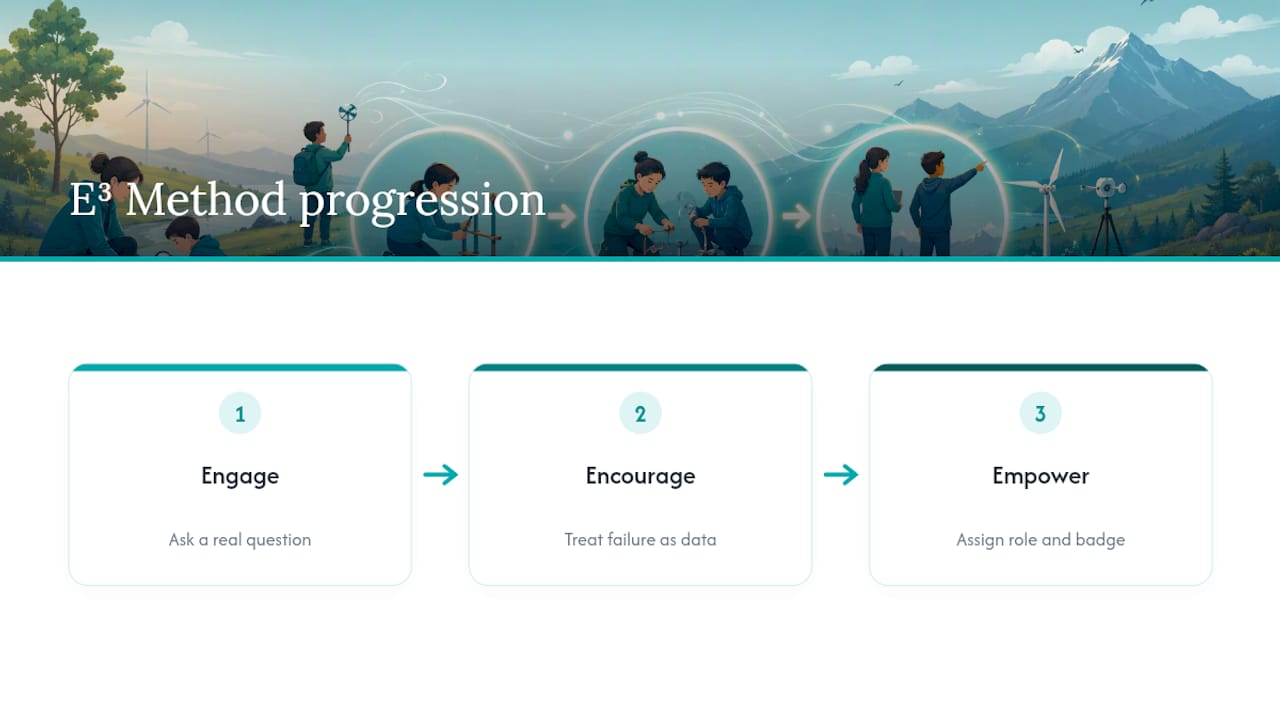
Teamgeniussquad built the E³ Method, Engage, Encourage, Empower, to turn any hands-on activity into an identity-building experience rather than a one-off demo. Engage means opening with a real question (“How far can your rover travel per wheel turn?”) instead of instructions. Encourage means normalizing a failed first test as data, not defeat, which lines up with research showing iterative redesign builds stronger problem-solving than getting it right the first time. Empower means giving kids a title, “engineer,” “meteorologist,” “field scientist,” and a badge or lab coat to match.
For learners who struggle with traditional writing, swap a written report for a photo log or voice memo, then add one short written line afterward. That single adjustment can reduce the anxiety that stops some kids from engaging with hands-on work at all.
Pro Tip: Give every child a simple field notebook with three boxes: “I tried,” “I noticed,” “I’ll change.” It takes thirty seconds to fill out and builds the exact reflection habit real engineers use.
A Teacher’s Honest Take on What Actually Works
The activities that stick are never the flashiest ones. A rover that goes twelve inches on the first try and thirty on the third teaches more than a perfect volcano ever will, because the improvement is visible and the child did it. The mistake I see most often is changing three things between tests, a new wheel, a new axle, a new surface, so nobody can tell what actually worked. Fix it by locking every variable except one before each retest.
If you try only one thing this week, make it the simplest version of the cardboard rover. Watch what happens on attempt two.
— Tita
Bring These Activities Home With Ready-Made Kits
Teamgeniussquad turns the outdoor activities above into grab-and-go kits, so you skip the scavenger hunt for parts and go straight to building. The solar energy kit with mirror disk pairs naturally with sun-powered experiments like a solar oven, while the miniature motor and fan kit gives wind and weather projects a mechanical twist kids can rebuild again and again.

Every kit includes the role-play pieces, lab coats, badges, and a guided notebook, that make the E³ Method work in practice, so reflection and literacy are built into the experience rather than bolted on afterward. If you are ready to pair an outdoor challenge with a kit designed to build lasting confidence, start with the solar energy kit or browse the downloadable lesson plans built to run alongside it.
Further Lesson Plans Worth Downloading
- Make a Cardboard Rover lesson plan from NASA JPL Education gives step-by-step build instructions and a data collection sheet for measuring distance and rotations.
- STEM activities for families offers additional low-cost project ideas using household and natural materials.
- Outdoor STEM lesson resources from Educate Outside covers weather and nature projects with printable student handouts.
Sources
- Make a Cardboard Rover – Engineering Lesson | NASA JPL Education
- Outdoor learning and child development (peer-reviewed article)

Leave a comment
This site is protected by hCaptcha and the hCaptcha Privacy Policy and Terms of Service apply.