Boost STEAM Confidence in Kids: Screen-Free Strategies
Building lasting STEAM confidence in your child has less to do with talent and far more to do with the types of hands-on experiences they have along the way. Many parents feel uncertain about which approaches actually work, especially when screens seem to dominate every “educational” option on the market. The truth is that project-based learning integrated with STEAM significantly improves self-efficacy, which is a child’s belief in their own ability to succeed, and that shift in belief changes everything. This guide is here to help you understand why, and exactly how to make it happen for your child.
Table of Contents
- What is STEAM confidence and why does it matter?
- How mastery experiences boost lasting self-belief
- Tailoring screen-free STEAM to fit every child
- Simple ways to nurture STEAM confidence at home
- The missing ingredient in most STEAM confidence guides
- Practical tools to jumpstart your child’s STEAM confidence
- Frequently asked questions
Key Takeaways
| Point | Details |
|---|---|
| Mastery trumps quick wins | STEAM confidence grows when kids master hands-on projects, not when they only finish easy tasks. |
| Project-based learning works | Empirical research shows screen-free, project-based STEAM activities drive real creative growth and self-belief. |
| Adapt to your child | Adjust the structure and goals of activities to fit your child’s learning style, especially for neurodiverse learners. |
| Embrace flexible goals | Ill-defined challenges can boost creativity and resilience more than rigidly structured ones. |
| Encourage and reflect | Praising effort and progress helps confidence stick, even if results aren’t perfect. |
What is STEAM confidence and why does it matter?
Now that we’ve previewed how project-based experiences drive real self-belief, let’s break down what STEAM confidence really means, and why it’s a game-changer for your child.
STEAM confidence is another way of describing self-efficacy, a term coined by psychologist Albert Bandura to describe how strongly a person believes they can succeed at a specific task. In the context of STEAM (Science, Technology, Engineering, Arts, and Mathematics), it means your child genuinely believes they are capable of figuring things out, trying again after a mistake, and growing through challenges. It is not about being “gifted.” It is about believing that effort leads somewhere good.
Research confirms that self-efficacy shapes outcomes in measurable ways. When children feel capable, they lean into challenges rather than avoiding them. That inner belief becomes a powerful engine for motivation, creativity, and achievement over time.
Here is why STEAM confidence matters so deeply for your child:
- Motivation stays strong even when tasks get hard, because kids believe their effort will pay off.
- Creative thinking expands when children feel safe to try new approaches without fear of being “wrong.”
- Learning achievement improves because confident learners engage more deeply with material rather than shutting down.
- Neurodiverse learners especially benefit from confidence-first environments, where their unique thinking styles are treated as strengths rather than obstacles.
- Long-term resilience grows as children learn to see setbacks as part of the process, not proof of failure.
“Differences in self-efficacy affect learning outcomes in meaningful ways. Children who believe in their ability to succeed are more likely to persist, explore, and achieve.” This insight shapes everything we do at Team Genius Squad, from the way our kits are designed to the role-play tools that help kids step into the identity of a scientist or innovator.
Fostering belief in oneself is not a soft, feel-good extra. It is the foundation that every other skill is built on. And the good news is that it can be nurtured intentionally, starting right at home.
How mastery experiences boost lasting self-belief
Understanding why STEAM confidence matters leads right into how to build it. Here is how practical mastery transforms what your child believes they can do.
A mastery experience happens when a child works through a real challenge, reaches a successful outcome, and carries that memory of success forward into the next challenge. It is not about breezing through easy tasks. It is about the feeling of “I did something hard, and I did it.” That feeling is incredibly powerful, and research backs it up consistently.
Project-based STEAM learning improves creative thinking, learning achievement, and self-efficacy with statistically significant results. This is not a theory. It is measurable, repeatable, and accessible to every family.
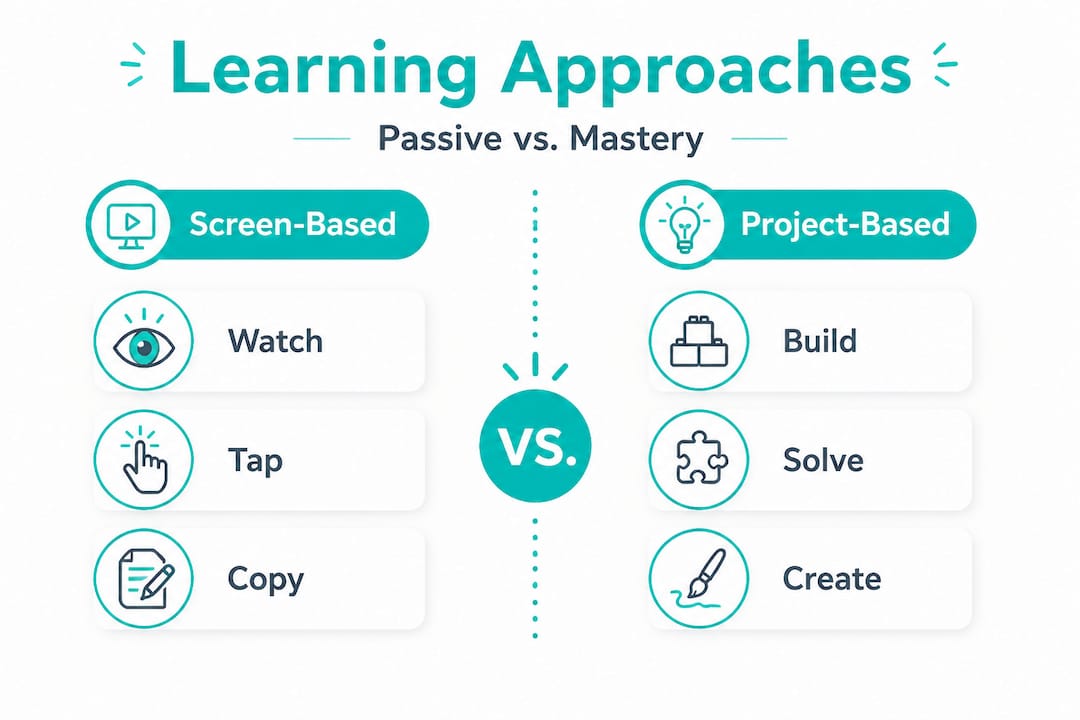
| Approach | Impact on confidence | Impact on learning | Best for |
|---|---|---|---|
| Passive screen-based learning | Low to moderate | Moderate | Short-term recall |
| Worksheet-only practice | Low | Moderate | Procedural skills |
| Project-based STEAM activities | High | High | Deep understanding and self-belief |
| Hands-on kit-based discovery | Very high | High | Neurodiverse and tactile learners |
The table above makes the case clearly. Hands-on, project-based experiences produce the strongest gains in both confidence and learning, especially for children who learn differently.
Here are five practical ways you can create mastery experiences at home right now:
- Set up a weekly experiment night. Choose one simple science challenge per week and let your child lead it from start to finish. Even if it does not work the first time, the process builds belief.
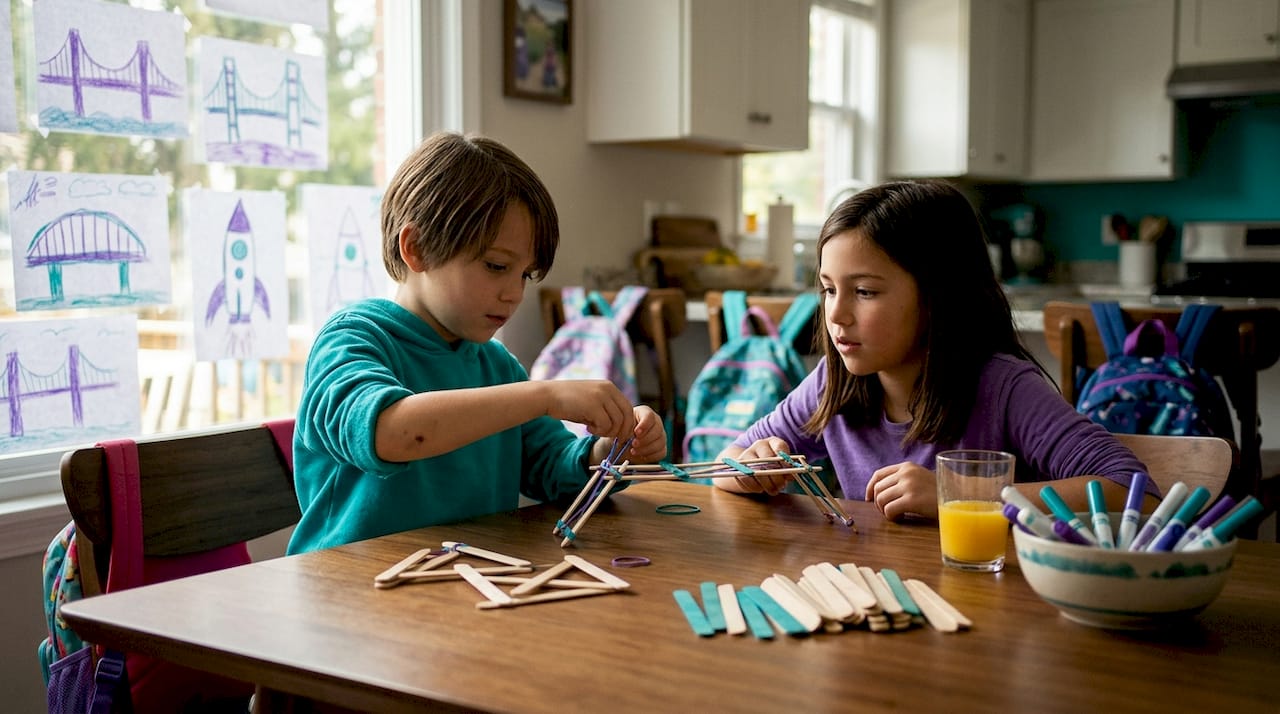
- Encourage DIY builds. Give your child basic materials like cardboard, tape, and craft sticks and ask them to solve a problem, like building a bridge that holds a book.
- Celebrate the attempt, not just the result. After every activity, ask your child what they tried, what surprised them, and what they would do differently next time.
- Use a STEM book bundle to pair reading with hands-on discovery, reinforcing both literacy and scientific thinking in one session.
- Download a free Ava eBook to introduce your child to a young innovator who looks like them and shares their story, because seeing yourself in a role model is its own kind of mastery experience.
Pro Tip: Focus on the process, not perfection. When your child finishes an activity, ask “What did you learn?” before asking “Did it work?” That small shift in language teaches them that the journey is the point, and that belief is what builds lasting confidence.
Tailoring screen-free STEAM to fit every child
So, what does project-based, mastery-focused STEAM look like in real life, and how can you adapt it for your unique learner? Let’s get specific.
Screen-free play, including arts and crafts, building kits, hands-on science, and sensory exploration, is especially important for neurodiverse children. Kids with dyslexia, dysgraphia, ADHD, or sensory processing differences often struggle in traditional learning environments that rely heavily on reading, writing, and sitting still. Tactile, hands-on activities bypass those barriers entirely and let children experience success through their strengths instead.
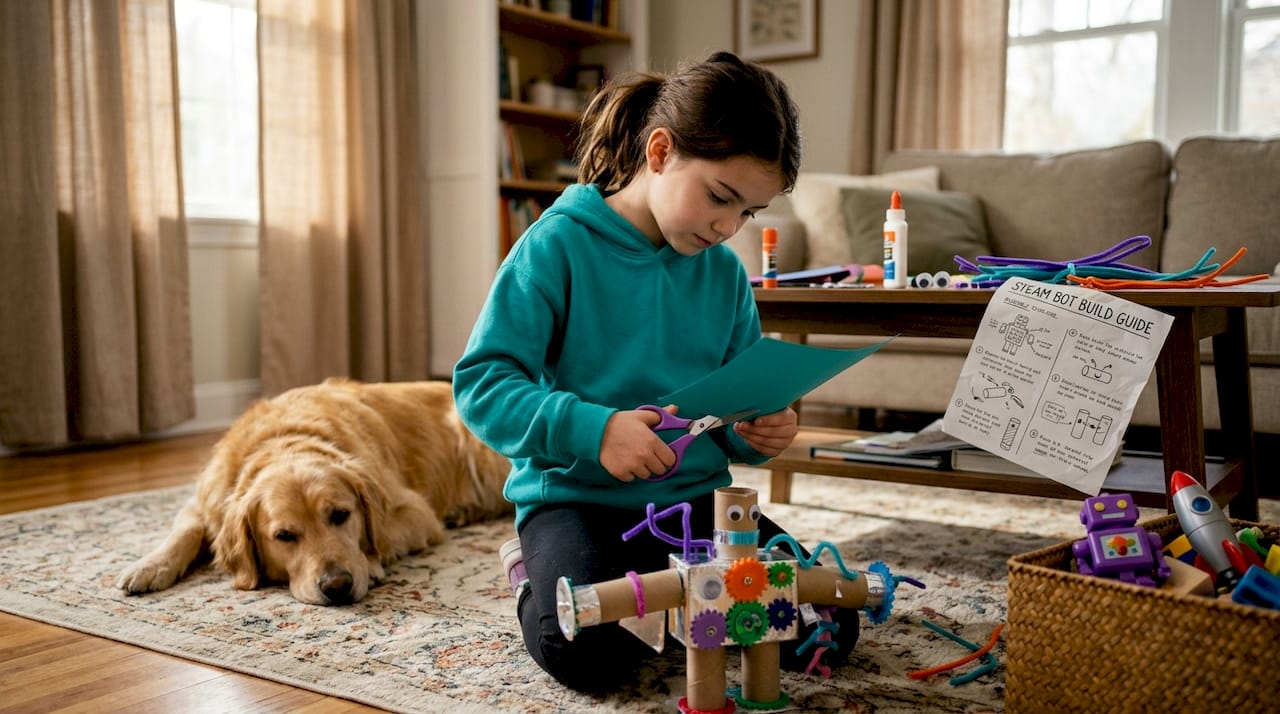
One important insight from research on play and learning is that ill-defined goals may boost creativity more effectively for certain kids, while others thrive with clear structure. This means the format of an activity matters just as much as the activity itself.
| Activity format | Pros | Cons | Best for |
|---|---|---|---|
| Open-ended, ill-defined goals | Sparks creativity, reduces performance anxiety, encourages exploration | Can feel overwhelming for some kids | Creative thinkers, kids who resist rules |
| Structured, step-by-step format | Builds confidence through clear wins, reduces frustration | May limit creative expression | Kids who need predictability, anxious learners |
| Hybrid: guided start, open finish | Balances confidence and creativity | Requires more parental involvement at first | Most neurodiverse learners, beginners |
Watching how your child responds to open-ended versus structured activities gives you real data about how they learn best. You do not need a diagnosis to notice whether your child freezes when given total freedom or lights up when there are no rules.
Signs your child may need more structure:
- They ask “Am I doing this right?” repeatedly.
- They abandon activities quickly when they feel uncertain.
- They get frustrated if materials are not used “correctly.”
- They prefer following instructions over inventing their own.
Signs your child may need less structure:
- They ignore instructions and do things their own way.
- They get bored quickly with step-by-step tasks.
- They ask “Can I try it differently?” often.
- They are most engaged when given a problem with no set solution.
Adding small encouragement tools can make a big difference regardless of your child’s learning style. STEAM encouragement sticker sheets give kids a tangible, visual record of their progress, while STEAM dolls and accessories help children step into the identity of a scientist or engineer through imaginative role play.
Pro Tip: Observe before you intervene. When your child starts an activity, give them two full minutes before offering any help or direction. What they do in those two minutes tells you more about their learning style than any quiz ever could. Then adjust the challenge level based on what you see.
Simple ways to nurture STEAM confidence at home
Now that you know how to match activities to how your child learns, let’s look at easy, actionable things you can try starting this week.
You do not need a classroom, a big budget, or a science degree to build STEAM confidence at home. What you need is consistency, encouragement, and a willingness to let your child lead. Small, regular wins add up faster than you might expect, and STEAM activities improve self-efficacy in measurable ways even over short periods of time.
Here are five screen-free STEAM ideas you can start this week:
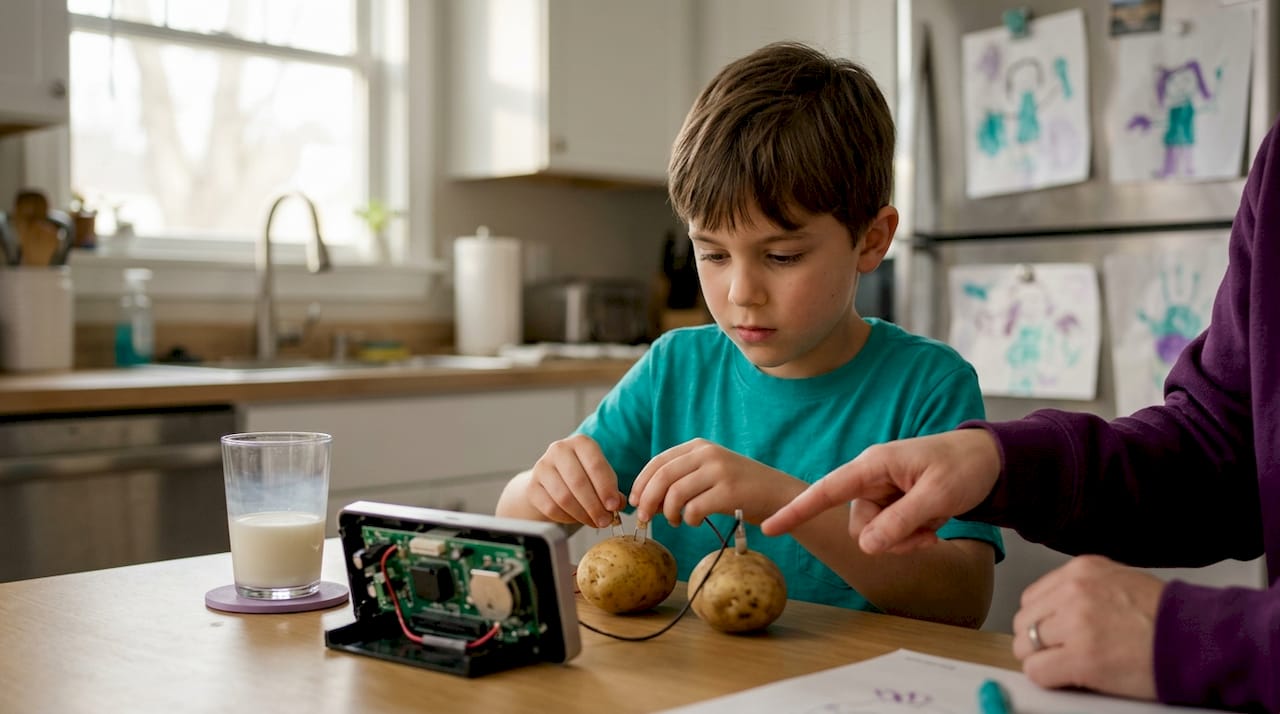
- DIY circuit lamp. Using a simple Electricity lab bundle, your child can learn how circuits work by building something that actually lights up. The moment the bulb turns on is pure magic, and it is a mastery experience your child will remember.
- Kitchen chemistry. Baking soda and vinegar reactions, color-mixing with food dye, or making butter from cream are all simple, safe, and genuinely exciting. Let your child form a hypothesis first and record what happens.
- Art-tech mashups. Combine drawing or painting with basic engineering by asking your child to design a machine, a city of the future, or a new invention. This bridges creative and analytical thinking beautifully.
- Nature engineering. Head outside and challenge your child to build a shelter for a small toy using only natural materials. This combines problem-solving, creativity, and physical exploration in one activity.
- Creative STEAM challenges using a STEM puzzle club house. This puzzle introduces children to diverse STEAM careers in a visual, engaging format that sparks curiosity about what they might want to build or create someday.
Beyond the activities themselves, small encouragement habits make a significant difference in how your child internalizes their success:
- Specific praise works better than general praise. “I love how you kept trying even when the bridge fell” is far more powerful than “Good job.”
- Display their work. Hang their experiment results, drawings, or build photos somewhere visible. Seeing their work honored builds pride and motivation.
- Use stickers and certificates. Physical tokens of achievement feel real and meaningful to young learners.
- Ask curious questions. “What would happen if you tried it with a bigger piece?” keeps the learning going without pressure.
- Share their discoveries with others. Let them explain their project to a grandparent or friend. Teaching is one of the most confidence-building acts there is.
“Confidence does not arrive all at once. It is built one small experiment, one brave attempt, and one moment of ‘I did it’ at a time. Your child is already a scientist. They just need the space to discover it.”
The missing ingredient in most STEAM confidence guides
Most STEAM guides focus heavily on choosing the right activity. They offer lists of experiments, kits, and curricula, and those resources are genuinely helpful. But they often miss something critical: the role of failure, flexibility, and emotional safety in building true, lasting self-belief.
Real confidence is not built only in the moments when everything works. It is built in the moments when something goes wrong and a child discovers they can handle it. That recovery experience, what researchers sometimes call “bouncing back,” is as important as any successful experiment. In fact, research shows that ill-defined goals increase creativity more effectively for certain children, suggesting that leaving room for ambiguity and even “failure” is not a gap in the plan. It is part of the plan.
At Team Genius Squad, we have seen this truth play out in the story behind our brand. Our founder’s journey with dyslexia and dysgraphia was not a detour around success. It was the path to it. When children learn that their different way of thinking is a feature, not a flaw, something remarkable happens. They stop waiting to feel “ready” and start building anyway.
The most important thing you can do as a parent is model flexible thinking out loud. Say things like “Hmm, that did not work the way I expected. Let me think about why.” Let your child hear you problem-solve in real time. When they see you treat a mistake as information rather than a verdict, they learn to do the same.
A great companion to this mindset shift is a STEM book bundle that features stories of young innovators navigating challenges, because narrative is one of the most powerful tools for reshaping how a child sees themselves.
Pro Tip: After any activity that does not go as planned, ask your child two questions: “What did you find out?” and “What would you try next time?” These questions reframe the experience as data, not defeat, and that reframe is where real confidence lives.
Practical tools to jumpstart your child’s STEAM confidence
You have the strategies, the mindset, and the understanding of what truly builds lasting self-belief in young learners. Now it is time to put it all into motion with resources designed specifically for this purpose.

Team Genius Squad’s hands-on, screen-free discovery kits are built around the E³ Method (Engage, Encourage, Empower), a framework that guides children from curious exploration all the way to genuine confidence. Every kit is designed with neurodiverse learners in mind, featuring tactile experiments, role-play tools like lab coats and badges, and literacy integration that makes learning feel like an adventure. Whether your child is just beginning their STEAM journey or is ready for a bigger challenge, there is a kit that meets them exactly where they are. Visit Team Genius Squad to explore age-appropriate bundles, free resources, and everything your young innovator needs to discover what they are truly capable of.
Frequently asked questions
What is the best way to build STEAM confidence in kids?
Project-based STEAM activities that focus on gradual mastery are proven to build STEAM confidence most reliably, because children gain self-belief through real, hands-on success experiences rather than passive learning.
How can I support a neurodiverse child’s STEAM learning without screens?
Offer hands-on, open-ended projects and adjust the structure based on your child’s comfort level, since matching goal style to the child helps them engage more deeply and build confidence at their own pace.
Why focus on mastery experiences, not just participation?
Mastery experiences have a significantly greater effect on building lasting self-belief because self-efficacy improvements are tied to actually completing challenges, not simply showing up for them.
What activities help kids recover from failures in STEAM learning?
Open-ended challenges with supportive feedback help kids build resilience, and research shows that creativity benefits from ill-defined goals, making loosely structured activities especially effective for helping children bounce back and try again.


Leave a comment
This site is protected by hCaptcha and the hCaptcha Privacy Policy and Terms of Service apply.