10 Black Inventors for Kids to Explore With Screen Free STEM Activities
This page gives you quick, kid-friendly profiles of Black inventors like Garrett Morgan, Madam C.J. Walker, and Lonnie Johnson, plus screen-free activities to try today. Each profile pairs a real invention with a hands-on experiment your child can attempt in an afternoon. Pick one story, try the linked activity, and watch curiosity take over.
TL;DR:
- Nearly all Black inventors featured made their innovations to solve everyday problems children can understand and even test through simple activities.
- Garrett Morgan’s traffic signal design introduced the yellow light to prevent crashes, and children can recreate this safety feature with colored paper plates.
- Lonnie Johnson’s Super Soaker demonstrates how pressure impacts water jets, and kids can experiment with squeeze bottles to see this principle in action.
- The inventions of Madam C.J. Walker and George Washington Carver stemmed from personal needs and crop reuse, encouraging kids to think creatively about everyday objects.
- Hands-on activities and stories help children grasp invention concepts, reinforce problem-solving skills, and inspire confidence in their ability to innovate.
Table of Contents
- Black Inventors for Kids: 10 Names Every Child Should Know
- Lesser-Known Black Inventors Worth a Closer Look
- Hands-On STEM Activities That Bring These Stories to Life
- Books, Videos, and Ready-Made Classroom Resources
- Turning These Stories Into Confidence and Design Thinking
- Why These Stories Matter to Us
- Bring These Inventor Stories Into Play With Team Genius Squad
- Where to Learn More
- Sources
- FAQ
Black Inventors for Kids: 10 Names Every Child Should Know
Every invention on this list started with a real problem, and that framing works wonders with young learners: someone got frustrated, then got creative. These profiles skip the dense timeline and go straight to what a 7-year-old or a 12-year-old can actually picture and try.
- Garrett Morgan built an early breathing device that firefighters wore to survive smoke, patented as US Patent 1,090,036, then invented the three-position traffic signal that added a pause between “stop” and “go.” That pause is the reason your street’s yellow light exists. Try this: have your child act out “stop, wait, go” with colored paper plates and explain why the pause keeps cars from crashing.
- George Washington Carver studied peanuts, sweet potatoes, and soil at Tuskegee Institute and found hundreds of new uses for crops farmers already grew, from peanut-based products to soil-restoring planting methods. Try this: peel a peanut and count how many different foods or products your child can guess are hiding inside it.
- Lewis Latimer drafted patent drawings for Alexander Graham Bell and improved the carbon filament that made light bulbs burn longer and cheaper, work detailed in Smithsonian educational materials. Try this: have your child sketch a lamp and label every part, just like Latimer did for a living.
- Madam C.J. Walker developed hair care products for Black women and built one of the first hair care companies led by a Black woman entrepreneur, turning a personal need into a business. Try this: ask your child what daily problem they’d fix if they started their own small company.
- Lonnie Johnson, a NASA engineer, accidentally invented the Super Soaker while testing a heat pump design in his bathroom, according to USPTO’s kids’ profile. Try this: fill a squeeze bottle with water and race to see whose stream shoots farthest, then talk about air pressure.
- Patricia Bath invented the Laserphaco Probe, a laser tool for cataract surgery, and became the first African American woman to receive a patent for a medical device under US Patent 4,744,360. Try this: shine a flashlight through a cloudy plastic cup versus a clear one to show how clouding blocks light, the way cataracts block sight.
- Marie Van Brittan Brown co-invented the first home security system with a camera, peephole, and two-way microphone, laying groundwork for the video doorbells common today. Try this: design a paper blueprint of a “smart door” with labels for a camera, lock, and speaker.
- Alexander Miles patented an automatic elevator door that closed shafts safely, cutting down a common cause of injury in early elevators. Try this: build a simple lever using a ruler and a pencil to show how a small push can move something bigger.
- Benjamin Banneker, a self-taught mathematician and astronomer, built a working wooden clock and helped survey the boundaries of Washington, D.C. Try this: take apart an old wind-up clock or watch (with supervision) to see the gears Banneker would have studied.
- Mark Dean helped lead the team that developed the IBM personal computer and later became one of the first Black IBM Fellows, holding multiple patents tied to computer architecture. Try this: open up an old, unused mouse or keyboard together and talk about what’s inside.
Pro Tip: Kids remember inventors better when they connect a story to a sense: the smell of peanuts, the splash of a Super Soaker, the click of a clock gear. Pick one sensory detail per story and let your child hold, smell, or build something related to it.
Lesser-Known Black Inventors Worth a Closer Look
Once the big names click, curiosity usually wants more. These lesser-known inventors work well for a short research project or a “mystery inventor” scavenger hunt.
- Sarah Boone patented an improved ironing board designed to make pressing sleeves and curved fabric easier.
- Elijah McCoy invented an automatic lubricating device for train engines so reliable that people started asking for “the real McCoy.”
- Frederick McKinley Jones developed refrigeration systems for trucks, which changed how far fresh food could travel.
- Emmett Chappelle researched bioluminescence and helped develop methods used to detect life on other planets for NASA.
For primary sources, Henry Baker’s historic patent roster documents dozens of 19th-century Black patent holders worth a family research night, and museum collections often hold the actual artifacts or patent drawings behind these names.
Hands-On STEM Activities That Bring These Stories to Life
Reading about an inventor is a start; building something is what makes the story stick. Each activity below runs 15 to 30 minutes with materials you likely already have.
- Traffic-signal sequencing (ages 5 to 8): Materials are colored paper and a timer. Have your child order red, yellow, and green cards, then explain out loud why Garrett Morgan added a pause between stop and go. The goal: understand sequencing and safety design.
- Water-pressure launch (ages 6 to 10): Materials are a spray bottle and a bucket. Compare a light squeeze to a hard squeeze and measure distance, connecting the result to how Lonnie Johnson’s pressurized water toy design worked. The goal: link force to outcome.
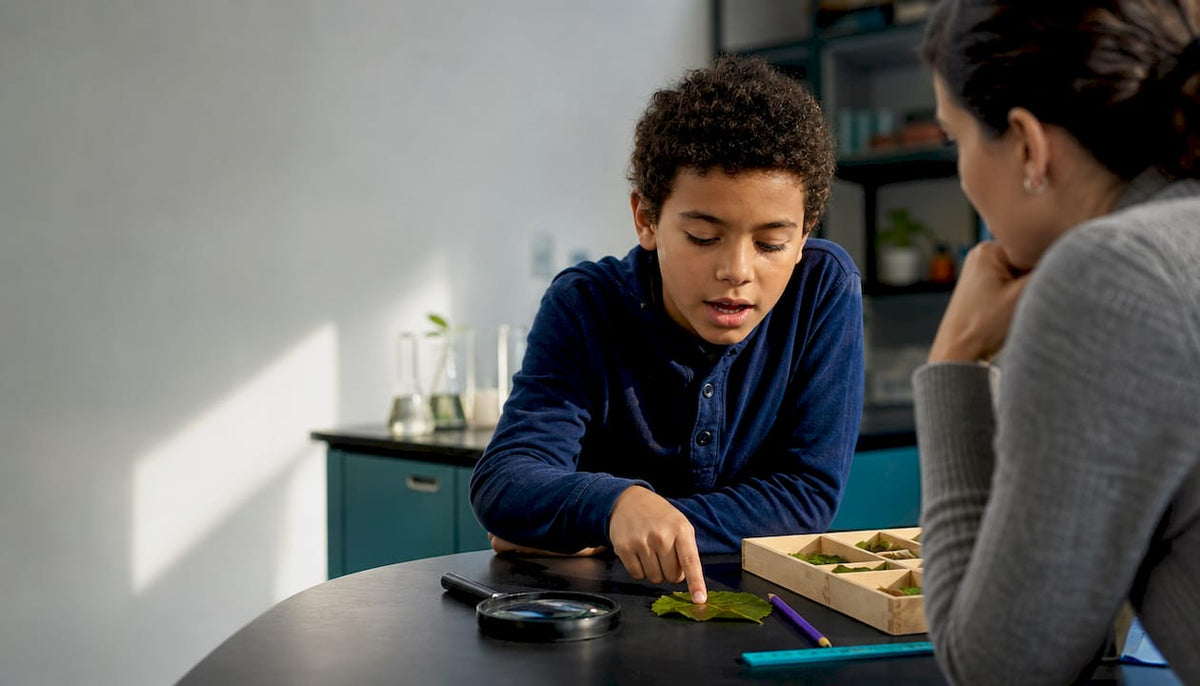
- Plant detective (ages 5 to 9): Materials are a few peanuts and a notebook. Shell, sort, and sketch what’s inside, then brainstorm other uses for a common crop the way Carver did. The goal: observation and creative reuse.
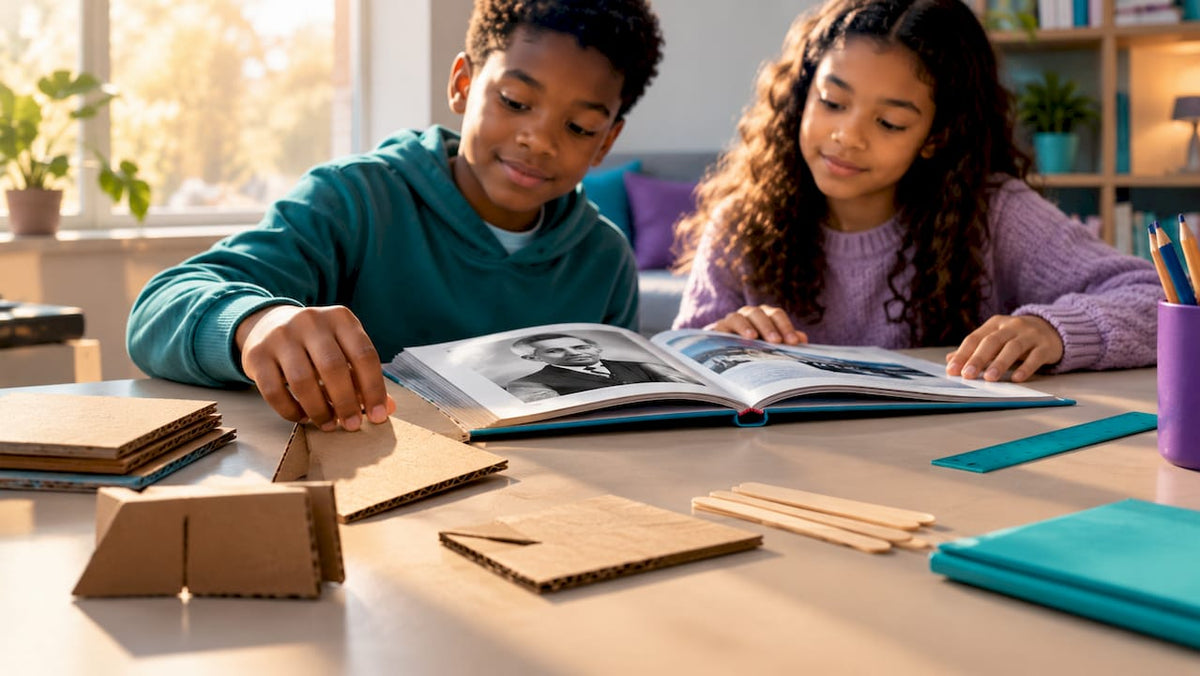
- Prototype and improve (ages 8 to 13): Materials are cardboard, tape, and string. Build a simple gadget (a mini elevator door or a tiny alarm), test it, note what fails, then rebuild once. The goal: iteration, the habit behind every invention on this page.
Pro Tip: Never treat the first attempt as the final one. Every inventor on this list rebuilt something at least once, so ask your child, “What would you change if you built this again?” That single question teaches more than a perfect result ever could.
Books, Videos, and Ready-Made Classroom Resources
For read-aloud time or a quiet afternoon, a strong picture book does half the teaching for you. Look for titles on Garrett Morgan, Madam C.J. Walker, and Lewis Latimer written for early readers (ages 5 to 8), plus middle-grade biography collections covering multiple Black inventors for readers ages 9 to 13. The National Inventors Hall of Fame publishes free activity sheets tied to specific inductees, and National Geographic Kids offers short, gradeable profiles with built-in discussion questions. Prioritize resources that pair a story with something to build, not just something to read.

Turning These Stories Into Confidence and Design Thinking
A simple four-step loop works for almost any age: Ask what problem needs solving, Imagine a few solutions, Prototype something rough, then Test it and note what happened. A 5-year-old might only manage “ask and imagine” out loud, while a 12-year-old can sketch, build, and revise independently.
- Ask reflection questions like “What surprised you?” instead of “Did it work?”
- Celebrate the attempt itself with a homemade badge or certificate, not just the result.
- For neurodivergent learners, break activities into short, five-minute chunks and add textures, sounds, or movement wherever possible.
- Document progress with a quick drawing or one sentence: “Next time I’d try…”
Pro Tip: Keep a “invention journal” where your child draws one failed attempt per week. Reframing failure as data, not defeat, is exactly how Lonnie Johnson got to the Super Soaker.
Why These Stories Matter to Us
These inventors didn’t wait for permission to solve real problems, and that’s the exact mindset behind our E³ Method: engage, encourage, empower. When a child sees an inventor who looked like them and built something from a kitchen-table idea, they start believing they can too.
— Tita
Bring These Inventor Stories Into Play With Team Genius Squad
Reading about Lonnie Johnson’s Super Soaker or Patricia Bath’s laser probe sparks curiosity, but role-play and hands-on building are what turn that spark into lasting confidence. Team Genius Squad’s screen-free Experiment Kits let kids step into a lab coat and test the same kind of iterate-and-improve thinking these inventors used, without a screen in sight.

Every kit is built around the same problem-solve-rebuild loop covered in the activities above, plus a literacy tie-in so kids write and reflect on what they discovered, not just what they built. If your child connected with Marie Van Brittan Brown’s security system or Alexander Miles’s elevator door, a hands-on kit is a natural next step to keep that curiosity going after this page closes. You can also book a Meet Ava STEM experience for a live, guided session that turns inventor-style thinking into a real 30-minute project with a young STEM ambassador leading the way.
Where to Learn More
- USPTO’s Journeys of Innovation: historical inventor stories, including Garrett Morgan’s.
- Smithsonian’s Lemelson Center: museum-curated inventor profiles and artifacts.
- National Inventors Hall of Fame: free STEM activity sheets tied to inductees.
Sources
- Of courage and caution | USPTO
- Garrett Morgan — Smithsonian / Lemelson Center
- Famous Black inventors — National Inventors Hall of Fame
FAQ
What are the top Black inventions kids should know about?
The traffic signal safety pause, the Super Soaker, the carbon filament in light bulbs, and the home security system are among the most kid-relatable Black inventions. Each one solves a problem children can see and test themselves, from Garrett Morgan’s signal design to Lonnie Johnson’s water toy.
Who are some little-known Black inventors worth researching?
Sarah Boone (ironing board), Elijah McCoy (train lubrication), Frederick McKinley Jones (refrigerated trucking), and Emmett Chappelle (bioluminescence research) are strong choices for a curiosity project. Henry Baker’s historic patent roster lists many more names for older kids to explore.
Who are some famous young Black inventors kids can relate to?
While most historic inventors on this list made their discoveries as adults, plenty of modern young inventors and student entrepreneurs are proving age is no barrier to invention. Pairing a historic profile like Lonnie Johnson’s with a modern kid-led project shows children that invention is not a closed chapter.
Who is the most famous Black inventor?
Garrett Morgan is often cited as the most widely known, thanks to the traffic signal that shows up on nearly every street corner today. His breathing device patent and traffic-signal design are both documented in USPTO’s historical archive.
What is a good first activity to try after reading these profiles?
Start with the traffic-signal sequencing activity for younger kids or the prototype-and-improve challenge for kids ages 8 and up, since both take under 30 minutes with materials found at home. If you want a guided version, Team Genius Squad’s Experiment Kits build on the same problem-solve-rebuild approach.


Leave a comment
This site is protected by hCaptcha and the hCaptcha Privacy Policy and Terms of Service apply.